
How Neurofeedback Supports Adult Focus and Cognitive Performance

Exploring Drug-Free Brain Training Options for Challenges with Attention
For years, challenges with focus, organization, impulsivity, and emotional regulation were often associated with children. Today, more adults recognize that these same difficulties can affect work, relationships, productivity, and daily responsibilities. As awareness grows, people are exploring ways to support mental clarity, self-regulation, and cognitive performance.
Some adults are also interested in medication-free ways to support brain function. Neurofeedback is a non-invasive form of brain training that uses real-time feedback to help the brain practice healthier, more efficient patterns. At Neurofeedback Therapy Centers Hawaii, training is personalized around your brain activity and individual goals.

Why Are More Adults Seeking Cognitive Performance Solutions?
Several factors are contributing to greater interest in brain wellness and cognitive performance. Adults face increasing demands on attention, organization, emotional regulation, and executive function throughout the day. For some, these demands make existing focus challenges more noticeable.
Increased Awareness and Understanding
Challenges with attention and impulse control were once discussed mainly in relation to children. As understanding has expanded, more adults recognize patterns they may have managed for years without identifying them clearly. Greater awareness has also encouraged people to learn more about brain function and the role self-regulation plays in everyday performance.
This awareness does not always begin with a diagnosis. Some people simply want stronger concentration, better organization, or greater consistency throughout the day. Brain training can provide another way to explore these goals.
Higher Workplace and Daily Demands
Modern careers often require sustained attention, problem-solving, quick decisions, and frequent task switching. Outside of work, family responsibilities, digital distractions, and busy schedules can place additional demands on the brain. When attention becomes difficult to maintain, even routine responsibilities can feel harder to manage.
Adults may seek support because they want to work more efficiently and stay mentally present. Others want to improve organization, reduce distractions, or respond more calmly during demanding situations. These are all areas connected to healthy self-regulation.
A Shift Toward Holistic Brain Health
People increasingly think about brain health as part of overall wellness. Just as exercise can support physical health, brain training is designed to give the brain opportunities to practice more efficient patterns. This has created growing interest in neurofeedback among adults focused on wellness and performance.
Neurofeedback uses information about brainwave activity to provide immediate feedback during training. Over time, this process may help the brain become more flexible and better regulated. You can learn more about how neurofeedback works and what happens during the training process.

Common Signs of Focus and Self-Regulation Challenges
Focus and self-regulation challenges can appear differently from person to person. They may affect professional responsibilities, personal relationships, organization, or your ability to stay mentally present. Some adults notice these patterns only during periods of increased stress or heavier workloads.
Adults experiencing difficulties with cognitive performance may notice:
Trouble maintaining focus on tasks or conversations
Frequent procrastination and disorganization
Becoming distracted when several demands compete for attention
Impulsive decision-making without considering consequences
Forgetfulness, missed appointments, or misplaced items
Frustration, restlessness, or difficulty regulating emotions
Difficulty unwinding or feeling mentally overloaded
Feeling mentally overloaded or unable to shift attention easily
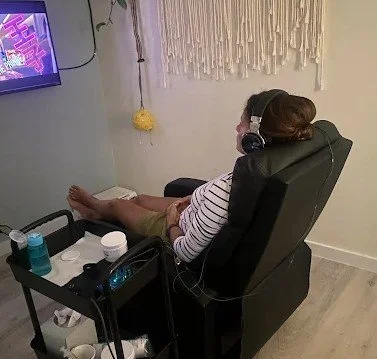
How Neurofeedback Supports Brain Optimization with a Drug-Free Approach
Some adults prefer to explore medication-free approaches to supporting brain wellness and cognitive performance. Others may use neurofeedback alongside care recommended by their healthcare providers. Neurofeedback is a non-invasive form of brain training that focuses on helping the brain recognize and practice healthier patterns.
During a neurofeedback session, sensors measure brainwave activity while specialized technology provides real-time visual or audio feedback. When the brain produces targeted patterns, the system responds with positive reinforcement. This information helps the brain learn through repetition without sending electrical stimulation into the brain.
The process relies on neuroplasticity, which is the brain's natural ability to learn and develop new patterns over time. Neurofeedback gives the brain repeated opportunities to practice greater stability, flexibility, and self-regulation. Individual experiences vary, but training may support focus, mental clarity, emotional balance, and cognitive performance.
Here’s How the Process Works:
Brain Mapping - Training may begin with a qEEG brain map. This assessment records electrical brain activity and helps identify patterns across different areas of the brain. The information can provide useful data when developing a personalized neurofeedback training plan.
A qEEG does not diagnose a condition on its own. Instead, it helps our team better understand your individual brainwave activity and how different patterns may relate to your training goals.
Personalized Training Protocol – Your neurofeedback protocol is developed around your brain activity, goals, and response to training. Someone focused on concentration may have different training priorities than someone seeking support with sleep, stress resilience, or emotional balance.
The plan can also be adjusted as training progresses. This individualized approach allows sessions to remain responsive to your needs rather than relying on one standard program for everyone.
Neurofeedback Sessions – During training, sensors monitor brainwave activity while you receive visual or audio feedback. The system responds to changes in brain activity in real time, helping your brain recognize more efficient patterns. Training is non-invasive and does not send electrical stimulation into your brain.
Repeated practice gives the brain opportunities to strengthen self-regulation. Like learning any new skill, progress may develop gradually over time.
Improve Focus and Regulation – Adults often explore neurofeedback because they want stronger attention, improved organization, or greater mental clarity. Others are interested in emotional regulation, stress resilience, sleep, or overall brain wellness. The goals can vary widely from one person to another.
Neurofeedback may support the brain's ability to shift between different states more efficiently. You can explore additional areas that neurofeedback may support, including focus, sleep, emotional balance, stress regulation, and cognitive performance.

Take the Next Step Toward Mental Clarity and Discover the Benefits of Neurofeedback Brain Training
If focus, organization, or mental overload affects your daily life, brain training may be worth exploring. Neurofeedback Therapy Centers Hawaii provides personalized neurofeedback and qEEG brain mapping designed around your individual brain activity and goals. Our approach is non-invasive, medication-free, and focused on supporting healthier brain patterns.
Focus and concentration
Self-regulation and mental resilience
Reduced distraction
Emotional balance
Executive function
Stress resilience
Cognitive performance
Long-term brain wellness
Neurofeedback is not a medical diagnosis or replacement for appropriate healthcare. Instead, it provides a way to train the brain and encourage more efficient patterns through real-time feedback and repetition.
Ready to Experience the Benefits of Neurofeedback?
Contact Neurofeedback Therapy Centers Hawaii to learn more about personalized brain training and qEEG brain mapping. Our team can answer your questions, explain the process, and help you determine whether neurofeedback aligns with your brain health goals.
